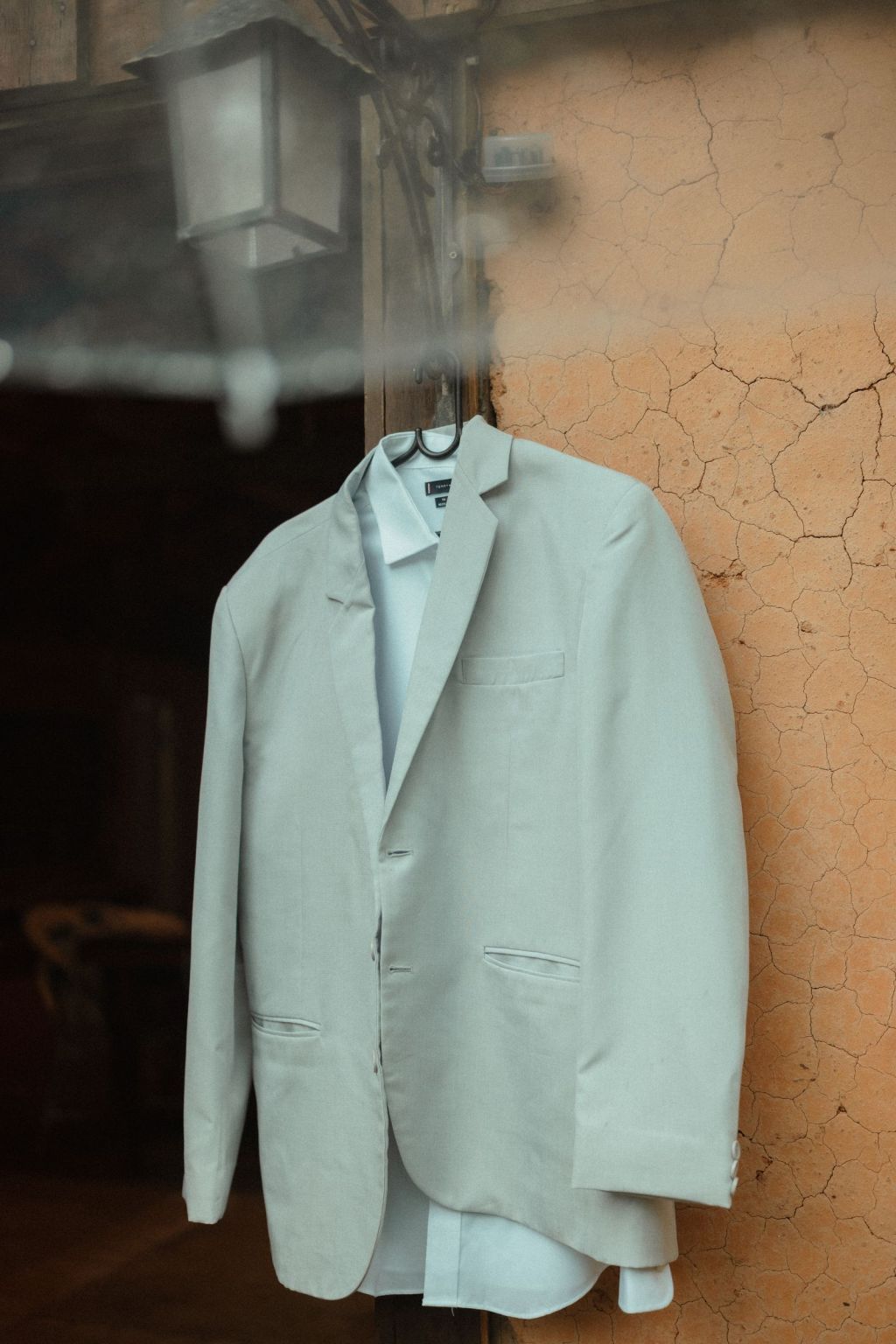
I don’t have anything against designer clothes. I have a problem when the designer’s name becomes the most interesting thing about what someone is wearing.
Give me a well-fitting navy blazer from an ordinary shop over an expensive jacket with the wrong shoulders. Give me a clean Oxford shirt over a T-shirt covered in lettering. I would rather notice how a man is dressed than immediately know where he bought his clothes.
That’s really what good personal style means to me. The clothes should make sense on the person wearing them. The label comes a distant second.
A big logo doesn’t make an outfit better
There’s a reason I keep coming back to plain sweaters, simple leather shoes and shirts without obvious branding. They’re easier to wear together. Nothing is fighting for attention.
Think about two otherwise similar navy knit sweaters. One has a giant contrasting logo across the chest. The other has no visible branding, or perhaps a tiny embroidered mark in the same colour as the fabric. Personally, I’d take the second one almost every time. I can wear it with a blazer, a wool coat, chinos or jeans without making the logo the centre of the outfit.
That doesn’t mean every logo is bad. A small Polo pony, a subtle stitched emblem or a discreet label doesn’t bother me. A logo can be part of a brand’s heritage. I just don’t think it should be the first thing everyone sees.
And this isn’t some rule about looking wealthy. The internet talks endlessly about ‘old money’ and ‘quiet luxury’, but you don’t need either label to understand the idea. Understated clothes give the fit, fabric and the person room to do the talking.
Fit is the first thing I check
A shirt can be made from lovely cotton and still look wrong if the shoulders hang too far off your frame. A pair of expensive trousers can ruin an outfit if they bunch around your shoes. Price doesn’t fix proportions.
For me, these are the basics worth paying attention to:
Shoulders: On a blazer or structured jacket, the shoulder seam should sit naturally. If the shoulders are fundamentally wrong, a tailor may not be able to fix them economically.
Body: A shirt or jacket should follow your shape without pulling across the buttons. Slim doesn’t have to mean tight, and relaxed doesn’t have to mean shapeless.
Sleeves: A clean sleeve length makes a bigger difference than most people expect. It shouldn’t swallow your hands.
Trousers: Get the waist right, then look at the hem. A neat break, or no break if that suits the cut, usually looks more deliberate than fabric piled over the shoes.
If I had to choose between buying another shirt and having two existing shirts adjusted properly, I’d seriously consider the alterations. Not every garment is worth tailoring, of course. But the pieces you wear constantly should fit.
Quiet doesn’t have to mean boring
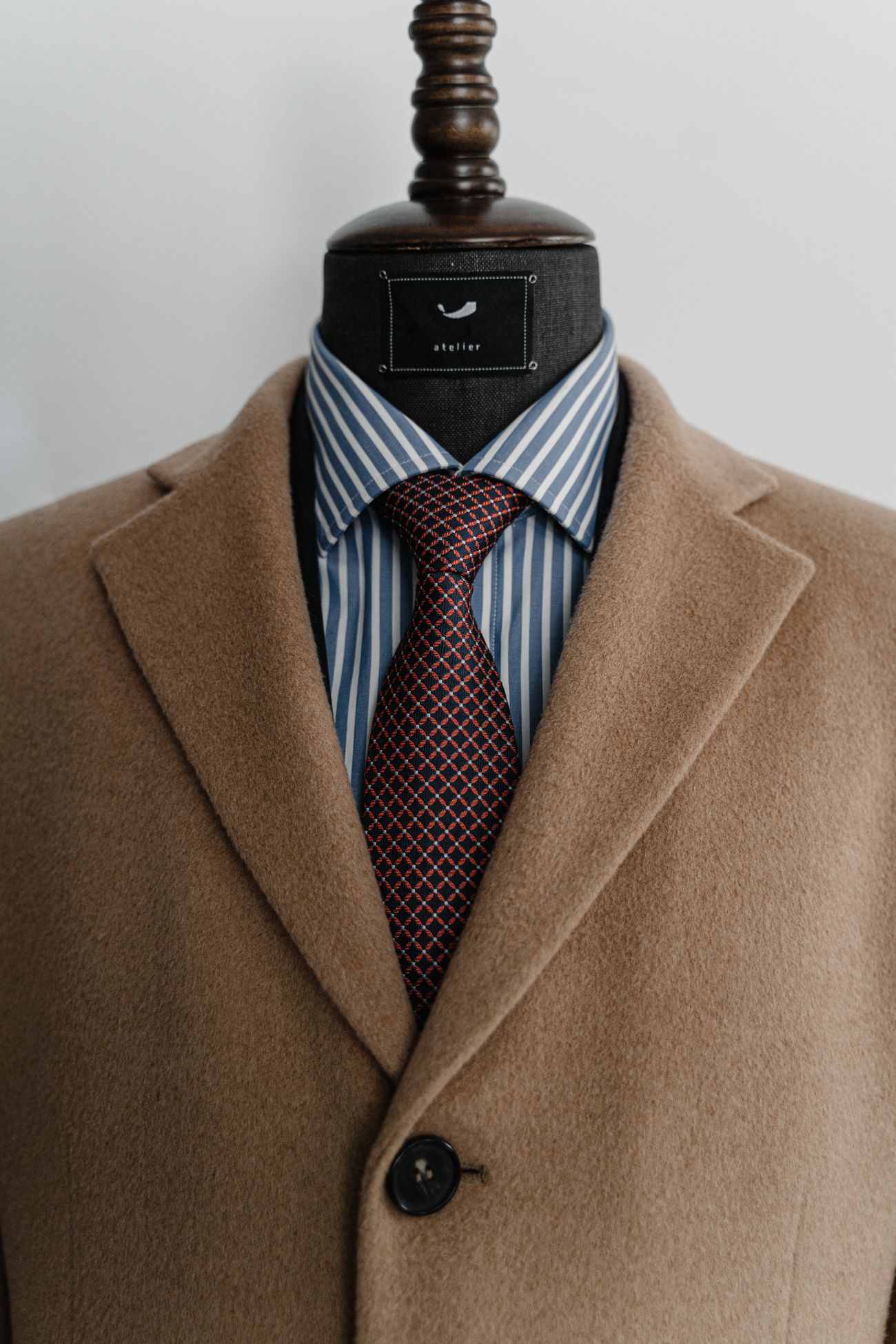
Some people hear ‘neutral colours’ and imagine a wardrobe with no personality. I see it differently. Navy, grey, cream, olive, brown and white give you a base that works. The interest can come from texture and proportion rather than a printed brand name.
A cream cable-knit sweater looks completely different from a flat white T-shirt. A brown suede loafer has a different character from a polished black Oxford. A brushed wool jacket brings more depth than a shiny fabric, even when both are technically the same colour.
You can also add something personal: an old watch, a scarf, an unusual pair of glasses, a pocket square when the occasion calls for it. One thoughtful detail often says more than several loud ones.
What I would actually wear
For an ordinary day, this is a combination I trust: a white or light-blue Oxford shirt with minimal branding, dark straight-leg jeans or grey trousers, brown leather shoes and a navy jacket that fits properly. Nothing groundbreaking. That’s the advantage.
If I want it more relaxed, I’d replace the blazer with a textured crewneck sweater and the shoes with clean, simple sneakers. If I want it smarter, I’d change the jeans for tailored trousers. The same pieces can do several jobs.
The accessories should follow the same idea. A watch doesn’t have to be expensive or enormous to look good with a shirt cuff. I’ve written about five watches under C$150 that illustrate exactly that.
Spend money where it actually shows
This is where I think a lot of people get distracted. It’s tempting to save up for a recognizable label, but the clothes you wear most often deserve your attention first.
Before spending more, I’d ask whether the item fits, whether I already own something that works with it, and whether I’d still want it if nobody could see the brand. That last question is surprisingly useful.
I also wouldn’t confuse plain clothing with quality. A logo-free sweater that loses its shape after three washes isn’t a smart purchase. Check the stitching, fabric, care instructions and how the garment sits on you. A quiet label is no guarantee; it’s simply one less distraction.
The point isn’t to look expensive
I don’t want to dress like an advertisement, and I don’t think looking ‘rich’ should be the goal. I’d rather have fewer things that fit me properly and work together.
Wear the brands you like. Wear a visible logo if it genuinely suits your style. But don’t let the logo make the decision for you.
A good outfit should make someone notice you — not just the name on your chest.
That’s why fit matters more to me than brand names. When the cut is right and the clothes work together, they don’t need to shout.

