On November 3, 2026, Americans head to the polls for the midterm elections. Television coverage, campaign photographs and election-night speeches will show countless candidates against familiar backdrops: flags, podiums, bright lights—and a remarkably consistent item of clothing. The dark business suit.
Why do politicians wear suits so often? The answer has less to do with any particular election than with centuries of tradition. A suit is a visual shorthand for official business, but it also raises a more interesting question: when everyone dresses alike, what can clothing actually tell us?
Why the Suit Became a Political Uniform
The modern business suit did not emerge from politics alone. As Stanford’s discussion of dress history explains, European men’s elite clothing gradually moved away from elaborate court fashion toward quieter and more utilitarian tailoring. That evolution was connected to changing ideas about class, citizenship and public identity.
A dark suit eventually became a kind of common visual language across government, business and diplomacy. It suggests that the wearer is participating in a formal institution rather than appearing only as a private individual. An Oxford University Press study of the suit and the American state traces how this understated style came to represent both official authority and ideals of equality—while also noting that such dress codes could exclude people who did not conform.
In other words, the political suit is not necessarily about individual fashion taste. It is partly a uniform—one without a badge.
What a Politician’s Suit Is Supposed to Communicate
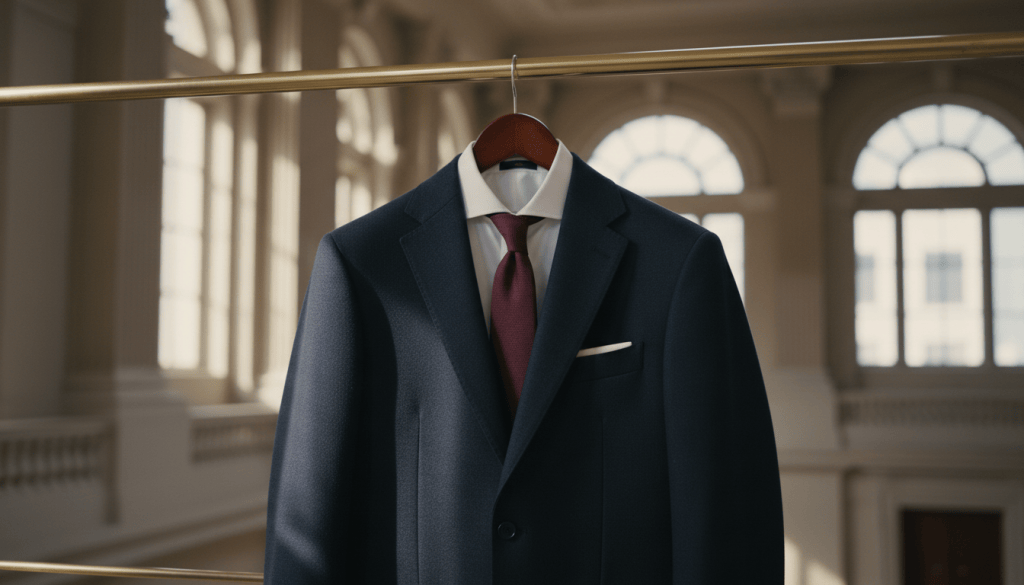
When you see a candidate in a navy or charcoal suit, white shirt and restrained tie, the outfit may read as familiar, professional and appropriate to the occasion. Those are social associations, not proof of character. A perfectly fitted suit cannot tell voters whether someone is honest, competent or aligned with their priorities.
In fact, an important part of the suit’s effect may be that it reduces visual distraction. The viewer recognizes the expected dress code and can turn attention to the speech, policies or performance. That is one reason the same formula appears across parties and political systems.
Dress also changes by setting. A candidate at a legislative hearing may dress differently from the same person at a factory visit, outdoor rally or neighborhood event. The difference can reflect the event’s practical demands as much as an attempt to project an image. Research into political visual communication treats these images as part of how public figures present themselves, but it does not mean every clothing choice reveals a hidden strategy.
Red Tie vs. Blue Tie: Is There a Secret Meaning?
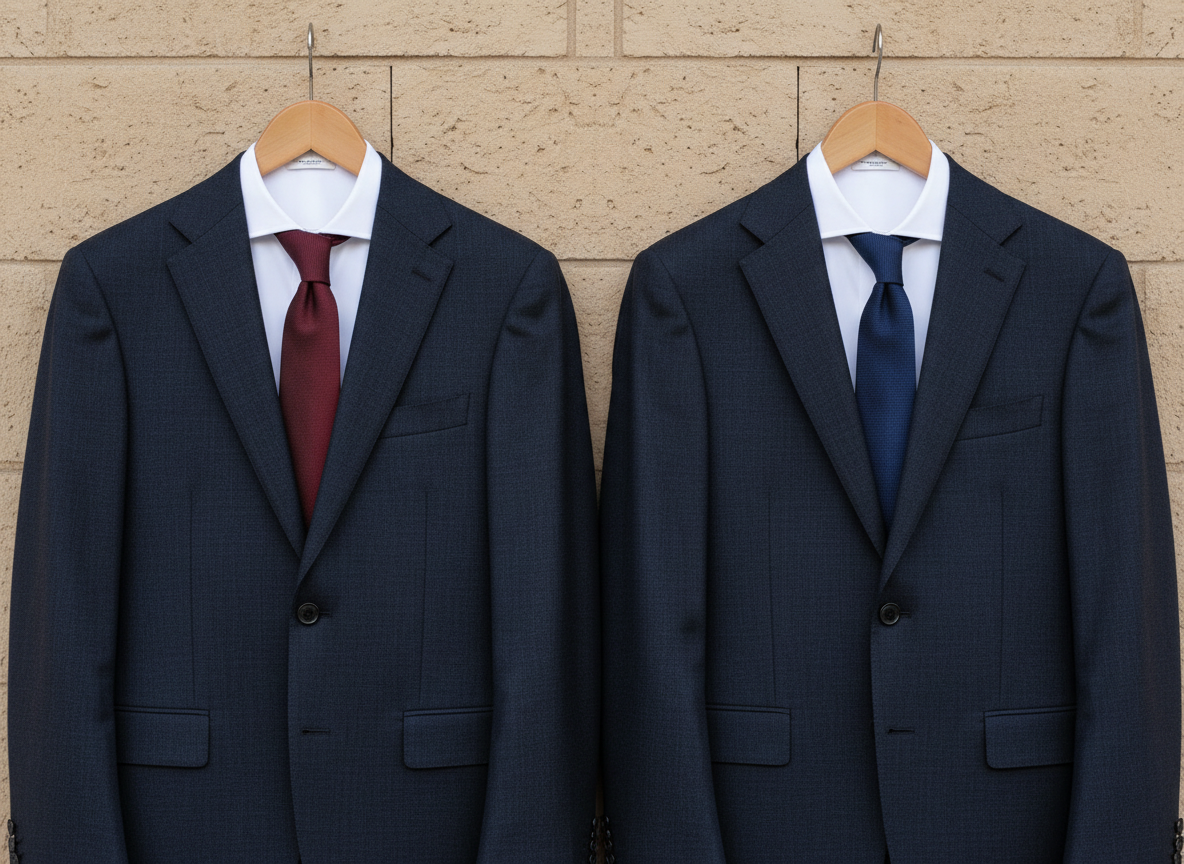
In the United States, red and blue are strongly associated with Republican and Democratic election graphics. But a red tie does not reliably identify a politician’s party, and a blue tie is not a secret declaration of political allegiance. Both colors appear throughout formal menswear, across political affiliations.
There is also a popular idea that the red ‘power tie’ makes a speaker look more dominant or trustworthy. The evidence is much less dramatic. A published series of experiments comparing red and blue ties on politicians found no meaningful effect on viewers’ assessments of leadership, dominance or believability in the tested settings.
The more useful lesson is that color has context. The tie, suit fit, lighting, event and viewer’s expectations all contribute to the overall appearance. Reading an entire political identity from one accessory is usually too simplistic.
Why Navy and Charcoal Keep Appearing
Dark navy and charcoal are versatile choices because they work with white and pale-blue shirts, many tie colors and a wide range of formal settings. They also photograph consistently under changing lighting conditions. But that practicality is a reasonable menswear observation—not evidence that one shade makes a candidate a better leader.
These colors are the political equivalent of a dependable wardrobe foundation. They allow small differences in texture, fit, lapel shape or accessory choice without abandoning the formal dress code.
What About Politicians Who Don’t Wear Suits?
The traditional suit-and-tie uniform has never applied equally to everyone. Scholars of parliamentary dress have documented how conventions can place different expectations on women, men and people who choose nontraditional attire. Women’s political clothing, in particular, may attract scrutiny that male politicians’ routine suits do not.
A blazer, dress, traditional cultural garment, rolled-up sleeves or even an open collar can each be appropriate in different settings. These choices may reflect personal style, function, culture or an occasion’s expectations. We should resist turning every departure from the conventional suit into a claim about the wearer’s motives.
What the 2026 U.S. Midterm Elections Have to Do With Fashion
The November 3, 2026 midterm elections provide a timely occasion to notice the visual conventions of public life. According to USAGov, all 435 seats in the House of Representatives and roughly one-third of Senate seats are contested during each regular midterm cycle. It is an election about representation and governance—not a fashion competition.
Still, election coverage gives us an unusually concentrated gallery of formal dressing. Whether viewers are watching a debate, a victory speech, a concession speech or a local news interview, the visual contrast between traditional suiting and more casual appearances may be striking.
What makes this worth writing about on a men’s style site is not which party dresses ‘better.’ It’s how a piece of menswear became so universally associated with public responsibility that we often stop noticing it at all.
The Style Lesson Beyond Politics
There is something ordinary readers can take from political dressing without copying a candidate’s outfit. Clothes establish expectations before you speak, but they cannot replace what you say or do.
For a job interview, a presentation or a formal event, a well-fitting dark suit still offers an easy starting point. You can make it personal through the shirt, the texture of a tie, the quality of the shoes or the way the jacket fits. The goal is to look comfortable in the setting—not to play a character.
That tension between a recognizable uniform and personal expression is familiar across men’s fashion. If you like the idea of dressing with more individuality, explore our men’s streetwear style guide or our look at Nicolas Cage’s changing approach to style.
Frequently Asked Questions
Why do politicians usually wear dark suits?
Dark business suits are a longstanding convention of formal public and professional dress. They are versatile and familiar, but do not tell us anything conclusive about a politician’s policies or competence.
Does a red tie mean Republican and a blue tie mean Democrat?
No. Although red and blue are associated with the two major U.S. parties in electoral graphics, tie color is not a reliable indicator of party affiliation or political belief.
Can politicians dress casually?
Yes. Appropriate dress depends on the setting, institutional rules and cultural expectations. A casual outfit should not be treated as automatic evidence of authenticity or a lack of seriousness.
Sources and Further Reading
Federal Election Commission — 2026 federal election date; USAGov — How midterm elections work.
Stanford Report — What dress codes reveal about politics and social change; Oxford Academic — The Suit and the State.
The Red Power(less) Tie — research on political tie colors; Parliamentary Dress — Gendered Contestation of the Political Uniform.
Image note: Editorial images are illustrative compositions. They do not depict actual 2026 election candidates or campaign events.

